Two products on one core
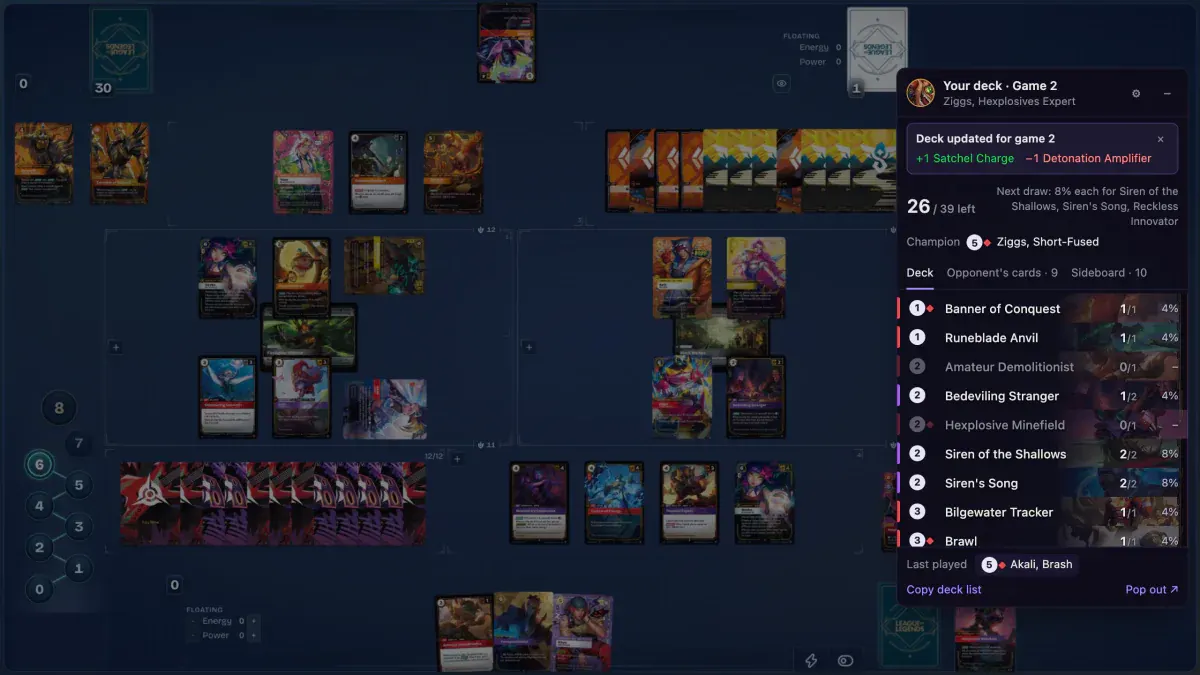
Players and streamers get a deck tracker and a local match history, read from their own game tab. Streamers can share the board through a relay, so viewers with the extension can hover the cards on YouTube and Twitch and open the streamer's deck.
Card recognition on any video
Since October 8, 2026, viewers can hover the cards in any Riftbound video on YouTube or Twitch, streamer or not. The extension runs the riftsight-vision models in the browser. From starting the vision work to switching it on for every Chrome user took 30 days.
How it's built
A TypeScript monorepo: the extension, a WebSocket relay running as several replicas on Railway, Twitch and Google account linking, a Twitch Video Overlay extension, and OBS broadcast graphics with a public data feed, in closed beta. About three months of work comes to more than 1,900 commits, 464 merged pull requests and over 500 test files (counted November 4, 2026).
Development runs as a team of Claude Code agent "leads" with fixed hand-off formats, review gates and a record of decisions. The method is open source as claude-workflow.
RiftSight was created under Riot Games' "Legal Jibber Jabber" policy using assets owned by Riot Games. Riot Games does not endorse or sponsor this project.